
If you are a CNA thinking about becoming a licensed practical nurse (LPN), you have probably seen “CNA to LPN bridge programs” advertised everywhere. You already know how to give hands-on care, talk with residents, and work under a nurse, so it makes sense to look for a program that builds on that.
This guide explains what those programs really are, what they require, how long they take, and what they cost. It also gives you a checklist for vetting a program before you hand over a deposit, because the word “bridge” can promise more than a program delivers.
The bottom line: Most programs sold as CNA to LPN bridges are standard practical nursing programs that require or prefer a CNA certification. Your CNA usually helps you get in, but it does not give you credit or shorten the program. Plan on about 12 to 18 months of full-time study, then the NCLEX-PN. Before you enroll, confirm the program is approved by your state board of nursing and ask for its NCLEX-PN pass rate.
A note on “LPN” and “LVN.” California and Texas call the same role a licensed vocational nurse (LVN). The training and the licensing exam (the NCLEX-PN) are the same. Everything in this guide applies to LVN programs too.
In This Article:
- What a bridge program is
- Bridge vs. standard LPN programs
- How the program works
- Admission requirements
- How long it takes
- What it costs
- Online programs
- How to vet a program
- Is it worth it?
- The entrance exam
What Is a CNA to LPN Bridge Program?
A CNA to LPN bridge program is a practical nursing program aimed at people who already hold a CNA certification. It teaches the knowledge and skills an LPN needs and prepares you to take the NCLEX-PN, the licensing exam for practical nurses.
In most programs, the “bridge” is your CNA certification itself, used as a prerequisite or an admissions advantage. As a CNA you completed at least 75 hours of state-approved training, including at least 16 hours of supervised practical work, and you passed a competency exam. That gets you in the door and gives you a real head start in the skills lab and on clinical units.
What it does not usually do is earn you academic credit. Pharmacology, medication administration, and the deeper body systems content are new material, and every student completes the full program.
Note: State boards of nursing strictly mandate the number of classroom and clinical hours required to sit for the NCLEX-PN. Because of this, schools cannot shorten a practical nursing program below about 9 months, even for experienced CNAs.
Bridge Program or Standard LPN Program?
Here is the honest answer: almost every program you will find is a standard practical nursing program. A CNA certification may be required for admission or may help your application, but it does not replace any coursework or shorten the program. A few programs let an experienced CNA skip a basic skill or two, which may save a few weeks at most. That is not academic credit in the way LPN to RN programs give it, where the LPN coursework counts toward the first year of the RN program.
That is not a reason to skip a program that uses the word “bridge.” It is a reason to compare it like any other practical nursing program, on cost, schedule, board approval, and NCLEX-PN pass rate. Ask every school directly: “Will my CNA certification count for any credit, or only for admission?” If a school says it counts for credit, get the number of credits or hours in writing.
As an instructor, I can say it is a great advantage to have work experience as a CNA going into an LPN program. CNA students understand the basics, so they can concentrate on the new information and on practicing the skills they already know.
How a CNA to LPN Bridge Program Works
Most programs combine three kinds of learning. Expect a schedule that is heavier than your CNA course, and plan your work hours around it.
Classroom (or online) coursework
This is where most of the new material lives. Common courses include anatomy and physiology, pharmacology, nutrition, maternal and child health, mental health nursing, and medical-surgical nursing. You will learn the “why” behind care you may already be giving, plus a great deal you have never been allowed to do as a CNA, such as giving medications.
Skills lab
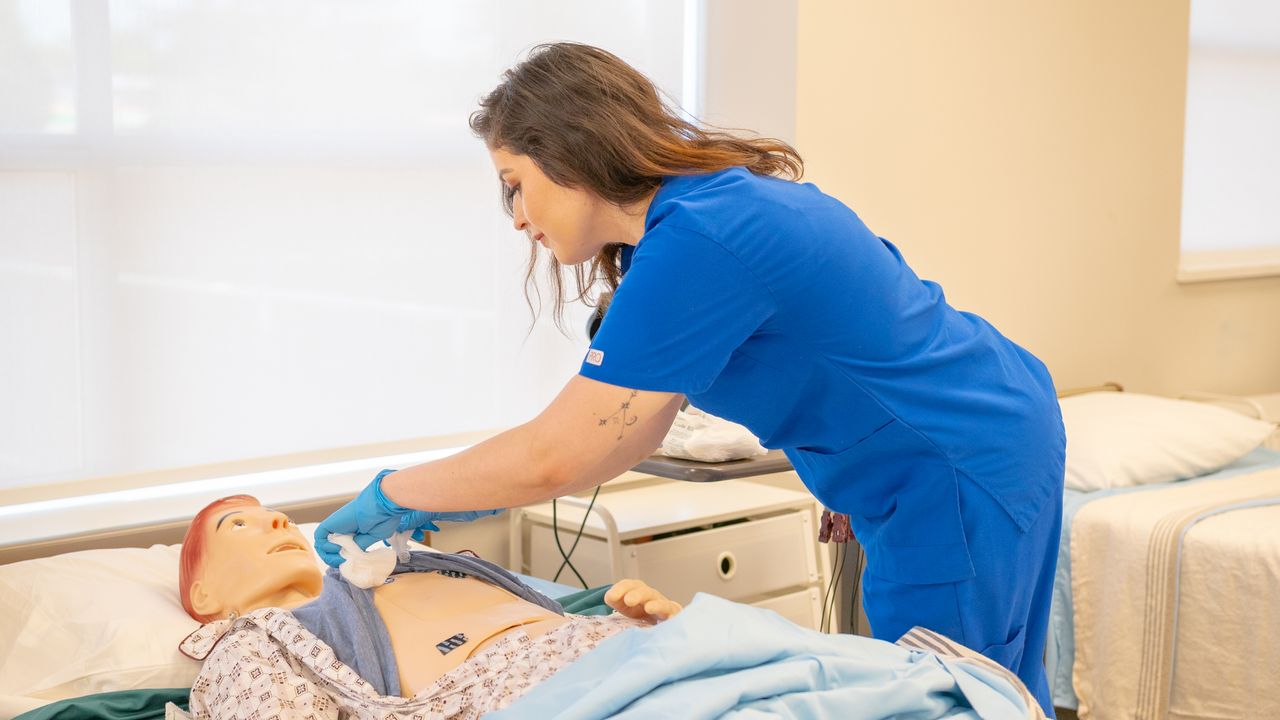
In the lab you practice LPN skills on manikins and with classmates before you use them on a real patient. Medication administration, wound care, and data collection are typical. Your CNA skills (vital signs, positioning, personal care) give you a head start here, even though you will still complete the full lab.
Clinical rotations
Clinicals put you on a real unit under an instructor. Long-term care is the most common setting, which is familiar ground. Many programs also place students in hospitals, clinics, or rehabilitation units. Clinicals are always in person, even in programs that call themselves online.
At the end of the program you graduate with a certificate or diploma in practical nursing, apply to your state board of nursing, and sit for the NCLEX-PN. You are an LPN once you pass and the board issues your license.
CNA to LPN Bridge Program Requirements
Requirements vary by school and by state, but most programs ask for some version of the list below. For programs marketed as CNA to LPN bridges, the CNA items are usually the main difference.
- An active CNA certification in good standing. The school will check your state’s nurse aide registry. If you are not sure your status is current, you can look yourself up on the registry before you apply.
- A high school diploma or GED.
- An entrance exam score. Many programs use the ATI TEAS. Others use the HESI A2 or their own test.
- Prerequisite courses. Some programs require a basic math or biology course, or anatomy and physiology, before you start. Others build it into the program.
- A criminal background check and drug screen. Clinical sites require them.
- Immunizations and a health exam. Expect to show records for things like hepatitis B, MMR, and a TB test, plus a current flu shot during flu season.
- CPR certification. Usually American Heart Association BLS for Healthcare Providers.
- CNA work experience. A few bridge programs ask for a minimum number of months or hours worked as a CNA.
Tip: Ask for the full admission checklist in writing before you pay an application fee. Prerequisite courses and immunization records can add weeks to your start date if you discover them late.
How Long Does It Take to Go From CNA to LPN?
Most CNAs become LPNs in about 12 to 18 months of full-time study. Part-time and evening programs, which many working CNAs choose, usually run 18 to 24 months.
Because your CNA certification usually counts toward admission rather than credit, plan on the full program length. Most of LPN training is material your CNA course never covered.
Add some time on either end:
- Before the program: 1 to 3 months for prerequisites, the entrance exam, and paperwork, longer if a program has a waitlist.
- After the program: a few weeks to a few months to get your authorization to test, schedule the NCLEX-PN, and receive your license.
How Much Does a CNA to LPN Bridge Program Cost?
The cost of an LPN program depends mostly on what kind of school offers it. Public community colleges and technical schools are usually the least expensive. Private career schools often cost several times more for the same license.
| Expense | Typical range | Comments |
|---|---|---|
| Tuition, community or technical college | $3,000-$10,000 | In-state rates; often the lowest total cost |
| Tuition, private career school | $15,000-$30,000 | Often includes books and uniforms in one price |
| Books, uniforms, and supplies | $2,500-$5,000 (national average) | Ask whether these are included in tuition |
| Entrance exam | $35-$150, depending on the exam, the school, and the testing location | Paid to the testing company or the school |
| Drug screen, immunizations, CPR | Drug screen (10-panel): $47-$50; immunizations and titers: $30-$250; CPR/BLS: $50-$100 | Required before clinicals; ask the school what the background check costs |
| NCLEX-PN registration | $200 | Paid to Pearson VUE |
| State license application | $0-$160 for first-time applicants, depending on the state | Paid to your state board of nursing |
Ask each school for the total cost of the program, not the cost per credit. Fees for labs, technology, testing packages, and graduation can add up to a meaningful amount.
Ways to pay
- Employer tuition assistance. Some long-term care facilities help CNAs pay for LPN school in exchange for a commitment to work there as an LPN, typically for 1 to 2 years. Ask your director of nursing or HR before you apply anywhere.
- Federal financial aid. If the school is accredited by an agency the U.S. Department of Education recognizes, you can file the FAFSA for Pell Grants and federal loans.
- Workforce funding. Many states use federal WIOA money to pay for training in high-demand jobs, and practical nursing is often on the list. Ask your local American Job Center.
- Scholarships. Schools, hospital foundations, and state nursing associations offer scholarships for practical nursing students.
Tip: Many grants and workforce funding programs have strict application deadlines, so do not wait to ask.
Online CNA to LPN Bridge Programs
No CNA to LPN program is fully online. Coursework can be online, but the skills lab and clinical rotations have to be done in person, because your state board will not license a nurse who has never practiced on real patients.
What “online” usually means is a hybrid program: lectures and readings online, with lab days on campus and clinicals at a facility near you. A hybrid program can be a good fit if you work full time, as long as you know before you enroll:
- How many days a week or month you need to be on campus
- Where clinicals take place, and whether the school arranges them or you have to find your own site
- Whether the program is approved by the board of nursing in the state where you live and plan to work
Important: A program approved in one state does not automatically qualify you to sit for the NCLEX-PN in another. If an online program is based out of state, ask in writing whether its graduates can be licensed in your state.
How to Vet a CNA to LPN Program Before You Apply
Your license depends on the program you pick, so check each one against this list. A good school will answer all of these questions without hesitation.
- Is the program approved by your state board of nursing? This is the one requirement you cannot skip. Graduates of programs without board approval cannot sit for the NCLEX-PN. Your state board’s website lists approved programs.
- What is the program’s first-time NCLEX-PN pass rate? Many state boards publish it by program. Compare it with the state average, and look at more than one year.
- Is the school or program accredited? Programmatic accreditation for practical nursing comes from the ACEN or the NLN CNEA. Institutional accreditation affects whether you can use federal financial aid and whether your credits will transfer later.
- Will your credits transfer to an RN program? If you might go on to become an RN, ask which LPN to RN programs accept this school’s credits.
- Does your CNA certification count for credit, or only for admission? Most programs will say admission only. If a school claims credit, get the number of credits or hours in writing.
- Who arranges clinicals, and where are they? Driving two hours to a clinical site twice a week is a real cost.
- What is the total cost, and what is the refund policy? Ask for both in writing.
Tip: Talk to a current student or recent graduate if you can. Ask how many people in their class finished on time and how prepared they felt for the NCLEX-PN.
Is Going From CNA to LPN Worth It?
For many CNAs, yes. The LPN role is a real step up in both scope and pay.
As a CNA, you observe and report to the nurse. As an LPN, you are the nurse for many tasks: you give medications, do treatments and wound care, collect data, and in long-term care you often supervise CNAs. The exact LPN scope of practice is set by your state’s nurse practice act. Our CNA vs. LPN comparison walks through the day-to-day differences.
The pay difference is significant. According to the Bureau of Labor Statistics, the median pay for LPNs and LVNs was $64,400 a year as of May 2025, compared with $42,260 for nursing assistants. According to Indeed, as of October 2026, LPN pay ranges from $25.35 to $44.12 an hour, but that range includes experienced LPNs. A newly licensed LPN can expect the lower end, about $25 to $35 an hour. The states that pay the most often have a high cost of living, which can make a big difference if you are trying to make ends meet.
The LPN license can also be a step toward becoming a registered nurse. Many LPN to RN bridge programs give credit for your LPN education. If you are still deciding between the two credentials, our guide to LPN vs. RN compares scope, salary, and the two licensing exams.
The trade-off is time and money. You will spend 1 to 2 years in school, often while working, and you may cut back your CNA hours during clinicals. Look at the cost of a program next to the pay difference in your area before you commit.
Preparing for the Entrance Exam
Most practical nursing programs rank applicants by their entrance exam score, so a strong score can decide whether you get a seat. If your program uses the ATI TEAS, start with our guide to what the TEAS test covers. If it uses the HESI A2, read what the HESI A2 exam covers. If you are not sure which one you will take, our HESI A2 vs. TEAS 7 comparison explains both.
It has been a while since many CNAs last took a math or reading test. Practice questions show you where you stand and what to review before test day. All Healthcare Careers offers practice tests for both the TEAS and the HESI A2, and nothing goes live without a nurse educator reviewing it.