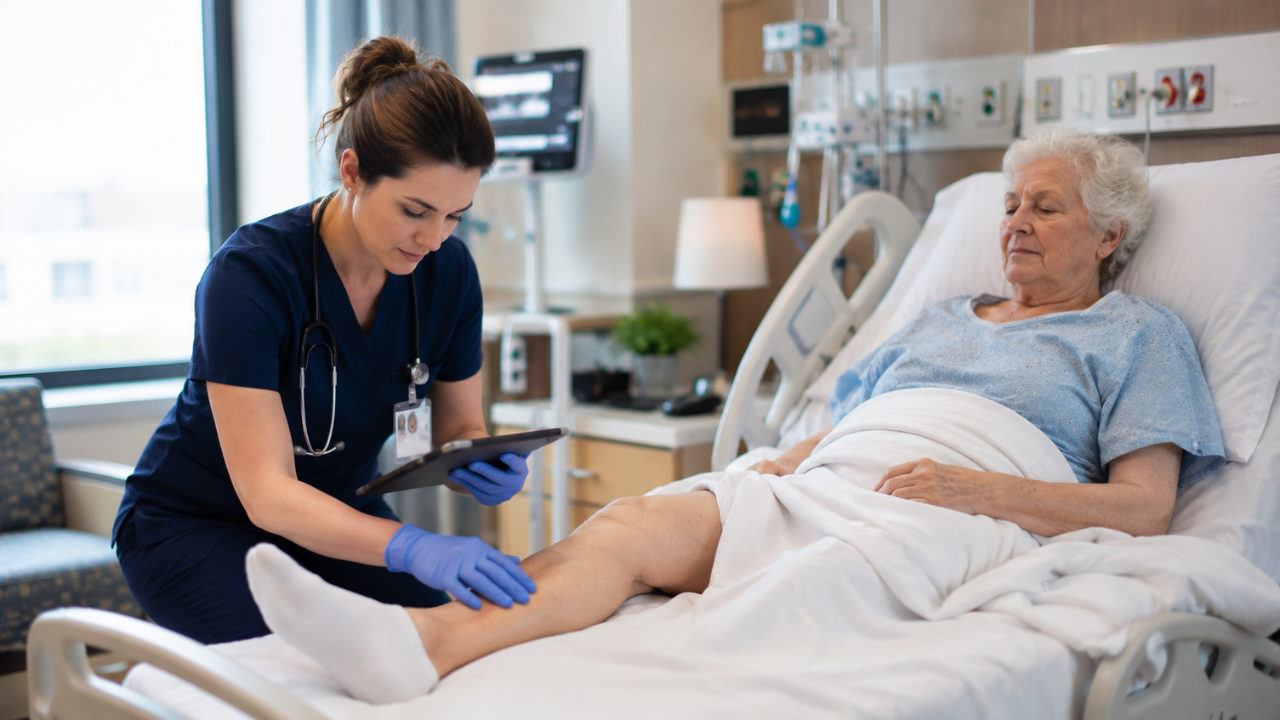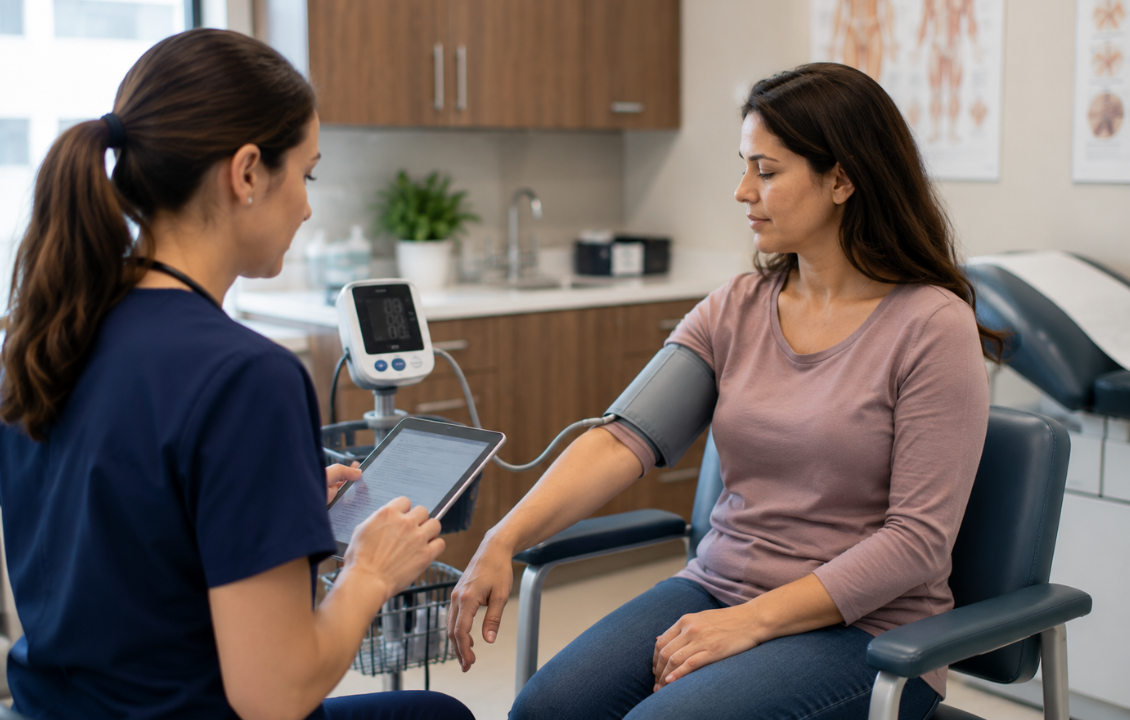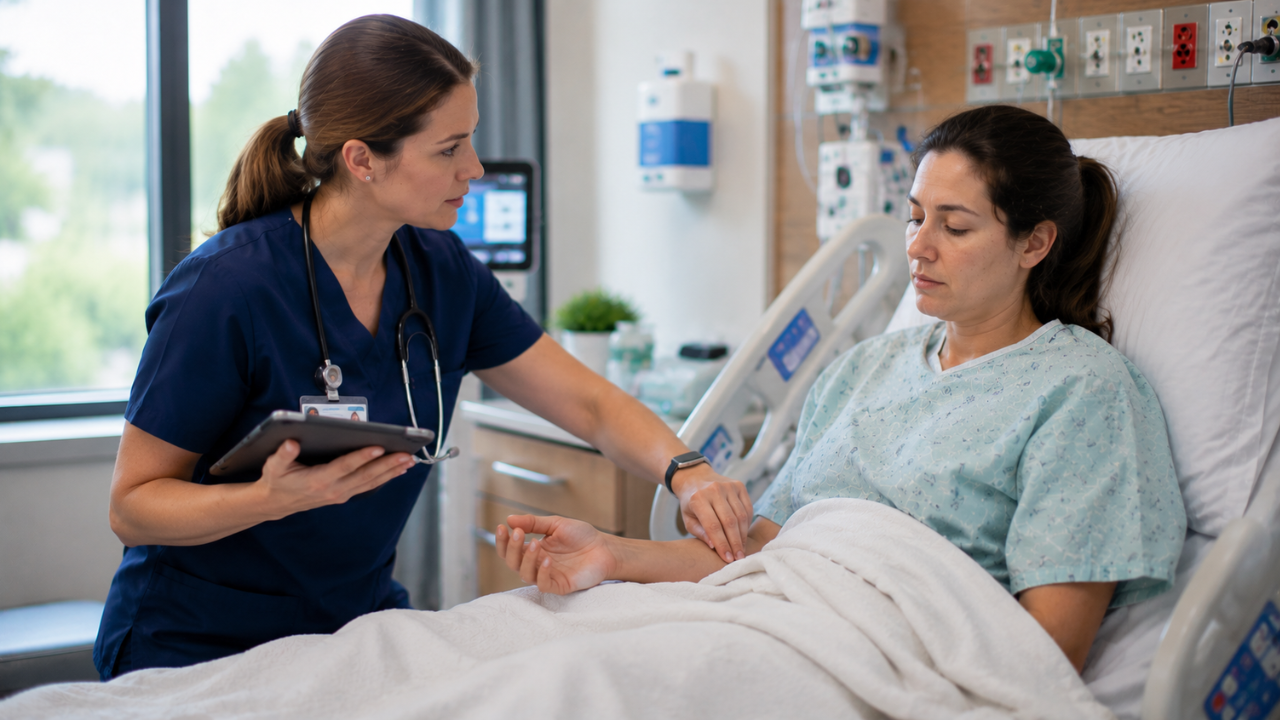
If you are thinking about becoming a Certified Nursing Assistant (CNA), this guide will explain everything you need to know before you start. Becoming a CNA is one of the fastest ways to enter the healthcare field.
In the United States, all CNA programs are required by federal law to have at least 75 hours of training. Most states, however, require more, with the average around 100 hours.
To meet the federal requirements, most programs take 4-12 weeks, depending on your state and the type of program you choose. Weekend-only or part-time programs may take longer.
In addition, requirements such as background checks and certification exam schedules can cause additional delays.
In this article, we’ll cover:
- Requirements before you start
- Types of CNA programs
- What training looks like week-to-week
- Program costs
- What to expect on the certification exam
I’m Michele, a nurse educator with over 20 years of experience. I help new CNAs build confidence, learn essential skills, and begin meaningful careers in healthcare.
At All Healthcare Careers, we help future CNAs understand the process clearly so you can start with confidence.
The Step-by-Step Timeline to Certification
- Step 1: Meet program requirements (1-2 weeks): The different requirements depend upon the state and program
- Step 2: Complete a state-approved CNA program (4-12 weeks): Every state has rules for the program to be approved to train CNAs
- Step 3: Pass the certification exam (2-4 weeks): The certification exam is similar in many states; your program can guide you if there are differences
- Step 4: Get added to your state’s registry (1-4 weeks). After you have passed the exam, you must get registered as a CNA. Each state has different requirements
The average time is 3-4 months.
For ease of finding your state’s requirements, follow this link:
CNA Certification Requirements by State
Why Are CNA Timelines So Different?
In addition to the reasons described in the previous timeline, there can be other delays.
Most often, they will not happen, but it is good to be prepared.
Potential Delays
- Program start times: For example, a program may start every 6 weeks, and you will have to wait for one to start.
- Funding delays: If you are getting help with payment, there might be delays in sending the funds.
- Clinical availability: In areas where several schools are competing for clinical sites, a lack of clinical availability will extend the program completion time until clinical hours are met.
- Absences and Exams: The programs have very strict requirements; there is usually no room for an absence or failing an exam. You may have to repeat the course.
- Retake of the exam: If you don’t pass the certification exam the first time, you will need to retake the exam.
- Administrative: Administrative issues can happen during any step along the way. The company doing background checks or the state registry office could be short-handed. The school secretary could be sick and unable to send out completion certificates. Computer issues may also delay the CNA timeline.
Before You Start the Program
- Age requirements: Most states require the candidate to be at least 16 to 17 years old and have a high school diploma or a GED.
- Background check/health screening:
- A criminal background check and fingerprints
- Physical exam
- Drug screening
- TB skin test
- Immunizations as required by the state
Important: Background checks can take a couple of weeks. Always check with the program before completing one yourself. You could end up paying twice if it doesn’t meet their requirements.
Completing a State-Approved CNA Program
Every state has its own rules, but all programs include three main parts:
- Classroom Instruction
- Hands-on Skills Laboratory
- Clinical Training at a Facility
Here is a breakdown:
Classroom Instruction (30-60 hours)
Usually completed in the first 1-3 weeks.
- Medical terminology and abbreviations
- Anatomy and physiology basics
- Infection control and safety protocols
- Patient rights and HIPAA regulations
- Communication with patients and healthcare teams
- Basic nutrition and hydration
Skills Laboratory (20-40 hours)
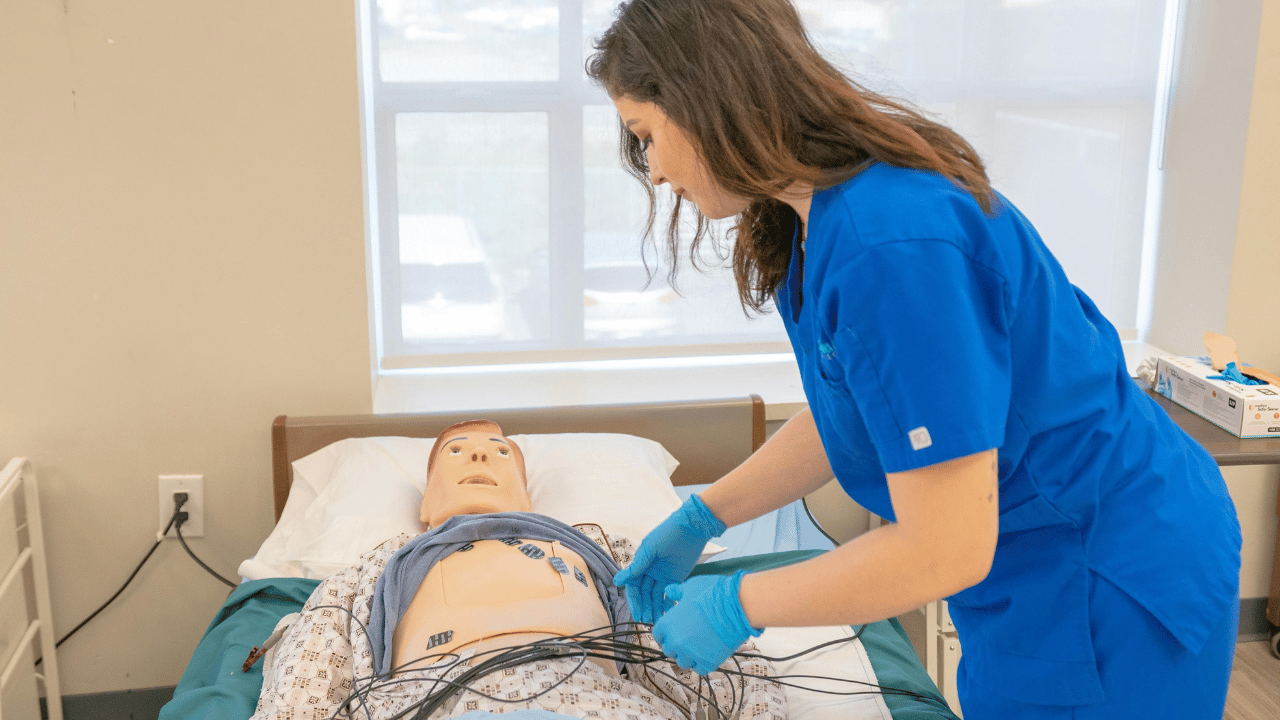
Often, it is just after classroom instruction.
- Vital signs measurement (blood pressure, pulse, temperature)
- Proper body mechanics and transfer techniques
- Personal care skills (bathing, dressing, grooming)
- Feeding and hydration assistance
- Range of motion exercises
- Emergency response procedures
Clinical Training (40-80 hours)
Usually, the final 1-3 weeks.
- Hands-on patient care in nursing homes or hospitals
- Supervised practice of all learned skills
- Documentation and charting practice
- Working with elderly and disabled patients
- Team collaboration with nurses and staff
Types of CNA Programs and Duration

States offer several types of CNA programs. Here are the most common:
| Full-Time: Weekdays | Evening and Night | Weekends/Part-Time |
| Hybrid: Online and In-Person | Employer-Sponsored Programs | Accelerated/Fast Track Program |
| Community College CAN Program | High School CNA Program |
Full-Time Programs
- Are usually Monday-Fridays, 7 hrs a day
- This is one of the quickest ways to finish
- Good if you do not have to depend on a full-time job
Evening and Night Programs
- Usually meet 2 nights a week for classes
- It requires a flexible schedule to meet clinical requirements
- Will take a little longer than full-time classes
- Facility clinical may require day or night shifts and more than two days a week
- Good if you work full-time during the day or need child care
Weekends/Part-Time Programs
- Meets on weekends only
- Very similar to evening and night classes
- Clinical can be completed on weekends only
High School and Community College Programs
- Some high schools offer CNA programs that can be taken, which will meet the requirements for high school credit
- Community colleges also offer programs open to the community
- Meaning you do not have to apply to college
Hybrid Programs (Online and In-Person)
- Classes are online, lab and facility clinicals are in person
- There are very few hybrid CNA programs in the United States
- Make sure it is offered in an area in which you can complete the clinical
Employer-Sponsored Programs
- Employers will pay for your training as part of a work contract
- There are many variations, so it would be smart to ask exactly what is paid for and what the required length of employment is
- It is a great opportunity if you must keep working
- One company that offers CNA training is Genesis Healthcare
- They operate long-term skilled facilities in 17 states
Accelerated/Fast Track Programs
- The fast-track option is available in some states and online
- This can take as little as 2-4 weeks
- They are intense programs often requiring more than 8 hours a day
- Classroom, skills lab, and facility clinicals are combined
Example of a 4-week program schedule.
| Length: 4 weeks, less than 120 hours | Schedule: Mon-Fri 8:00 am – 3:30 pm | |
| Week 1
Classroom and Skills Lab |
Focus Areas: CNA role and responsibilities, patient rights and communication, Infection control and safety
Skills Practice: Hand hygiene, PPE, bed making, transfers, fire safety |
| Week 2
Classroom and Skills Lab |
Focus Areas: Nutrition and feeding, vital signs and basic anatomy, rehabilitative care
Skills Practice: Feeding, positioning, ambulation, measuring temperature, pulse, respiration |
| Week 3 + 4
Clinical |
Location: Partnered nursing home or hospital
Focus: Direct patient care under supervision, applying learned skills in real settings, documentation, and teamwork |
Cost of CNA Programs
The cost of CNA programs varies.
- Average tuition in the United States is $500-$1,500
- In addition to tuition, there are other costs such as the background checks, textbooks, and lab supplies
- Some programs bundle tuition, textbooks, lab supplies, and the certification exam fee into one price
- Ask before you enroll
Good to know: Federal law requires Medicare and Medicaid-approved facilities to reimburse CNA’s for training and certification exam costs if hired within 12 months of completing the program.
Breakdown of Average Costs
| Expense | Average Cost in the U.S. | Comments |
| Tuition | $500-$1,500 | Community Colleges are usually the least expensive |
| Textbooks | $50-200 | |
| Lab Supplies | $50-250 | Includes stethoscope, gait belt, and blood pressure cuff |
| Uniform and shoes | $60-200 | The program will tell you which color and style is required. |
| Background Check and Fingerprinting | $50-150 | Required by all states to take the exam |
| Medical Clearance | $0 -300 | Physical exam, TB skin test, immunizations |
| Certification Exam | $100-200 | Varies by state |
The Nurse Aide Certification Exam
Knowing what to expect on the exam will help you prepare and increase your confidence. The nurse aide certification exam (its official title) has two parts: a written exam and a hands-on skill exam.
The Written Exam
- There are usually 60-70 multiple-choice questions
- 90 minutes to complete
- The questions are based on your program training
Written Exam Content:
- Physical Care
- Activities of Daily Living (ADLs)
- Basic nursing skills, such as taking vital signs or feeding a resident
- Promoting self-care and independence
- Psychosocial Care
-
- Emotional and mental health needs
- Spiritual and cultural needs
- Role of the Nurse Aide (38%)
-
- Communication
- Client rights
- Legal and ethical behavior
- Scope of practice
*Approximately half of the questions are on physical care
Tip: The nurse aide certification exam does not allow you to go back to a question. Practice answering every question the first time.
The Clinical Skills Exam
- 5-7 skills will be demonstrated in front of a nurse aide evaluator. The number of skills depends on the state’s requirements
- Every exam will test handwashing
- One skill will include measuring; you must measure and record the result
- You have 30-35 minutes to complete all the skills
- The skills will be done with a live volunteer
Important: Indirect Care Steps (Critical Steps)
You must complete these steps with every skill.
- Knock, greet the resident, and introduce yourself
- Explain the procedure before starting
- Provide privacy (curtain or door)
- Wash your hands before and after the skill
- Maintain safety (lock bed wheels, call light within reach)
Forgetting an indirect care step is the number one reason students fail the skill.
Tips for the Clinical Skills Exam
- If you forget a step, say it out loud and fix it, if possible.
- It is normal to feel nervous; it is expected. Practice a relaxation technique, such as deep breathing, to help reduce anxiety.
- Don’t rush, you will have plenty of time to finish.
Skills You Should Know for the Exam
Every skills exam will include handwashing. This is the most important skill to remember.
Other skills you need to know include the following:
| Vital Signs | Measurements | Personal Care | Mobility & Positioning | Nutrition & Specialty |
| • Counting radial pulse
• Counting respirations • Measuring blood pressure |
• Measuring urinary output
• Measuring weight |
• Partial bed bath
• Perineal care (male or female) • Mouth care (teeth or dentures) • Hair and nail care • Dressing a resident with a weak arm |
• Ambulation with a gait belt
• Transfer bed ↔ wheelchair • Repositioning (side‑lying or Fowler’s) • PROM (Range of Motion) |
Nutrition:
• Feeding a resident who cannot feed themselves Specialty: • Catheter care for a female • Wearing and removing PPE |
On the Day of the Exam, Bring:
- Two forms of identification (Must be original, not photocopies.)
- Scrubs and closed-toed shoes
- A watch with a second hand
Note: No cell phones, notes or personal items allowed.
Scheduling the Exam and the State Registry
After completing a state-approved program, you will need to complete the exam application and pay the testing fee.
If you do not need testing accommodations, you can usually test within 1-2 weeks. Accommodations can add 3-4 additional weeks.
As of April 2026, no states have an exam waiting list, but if you live in an area in which resources are limited, you may want to double-check.
Exam fees: The state average is $100 -$200.
Some states require background checks BEFORE you can test, which can take 1-2 weeks.
You will need to:
- Submit proof of completing a state-approved CNA program
- Provide identification and any required background checks
- Proof of passing the certification exam
- Pay the certification fee
Once the background checks and application fees have been processed, you can schedule your exam. This is normally just a couple of days
Note: Many states are using TestMaster Universe (TMU) to manage CNA certification and records. If used, your state’s CNA website will direct you to TMU for scheduling and available test dates.
Career Opportunities
Becoming a CNA opens doors to other healthcare careers. After gaining some experience, you can apply to schools to become a Licensed Practical Nurse (LPN) or Registered Nurse (RN). Many employers offer tuition assistance to help you advance.
Working in healthcare is rewarding and provides a stable income. As you learn to care for people, you will grow into a professional healthcare worker who is a role model to your family and friends.
Take the Next Step Toward Your CNA Certification
The steps to becoming a CNA may seem like a lot, but in a few short weeks, you can be ready to schedule your certification exam.
It is well known that students who take practice questions before an exam are more likely to pass. Passing the CNA exam requires more than just memorizing facts; it requires understanding how to provide safe, professional care.
Practice questions will help prepare you to think like a CNA and pass the exam. All Healthcare Careers will provide you with the most realistic exam experience possible.