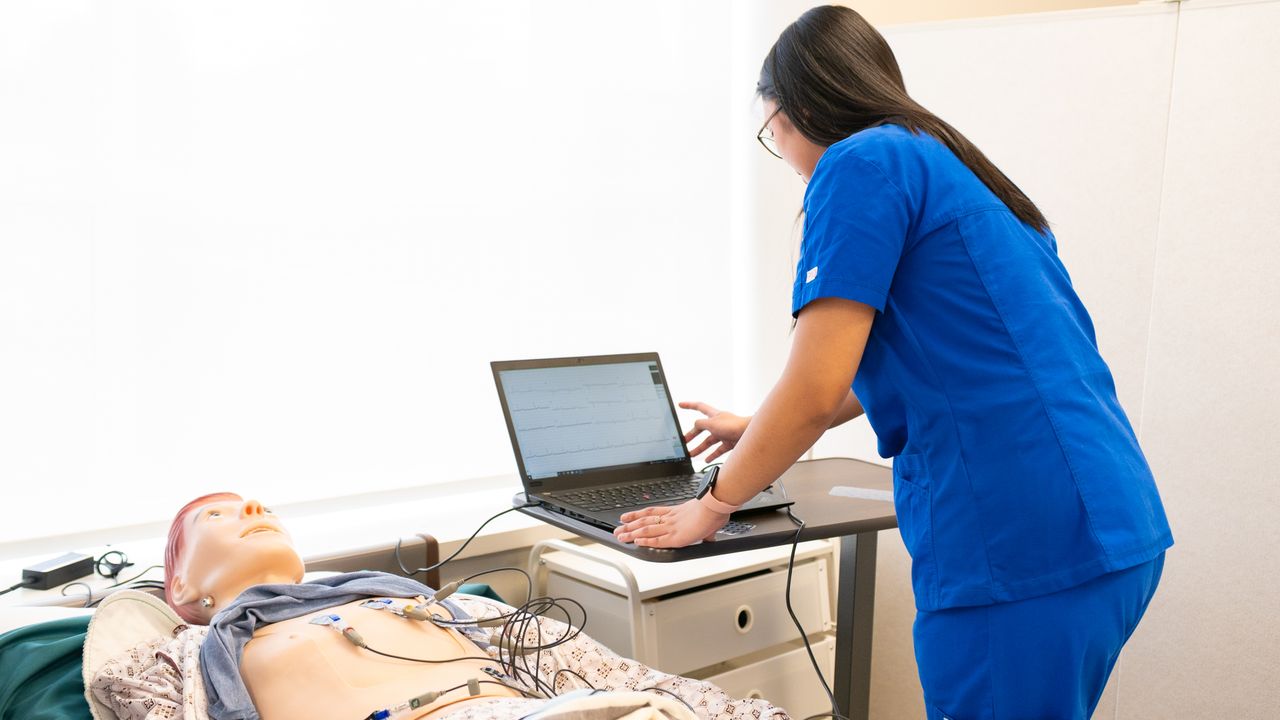

Becoming a CNA works the same basic way everywhere in the United States. You complete a state-approved training program, pass a competency exam, and get listed on your state’s nurse aide registry. The details are where states part ways. Training hours, exam vendors, renewal rules, and even the name of the credential change when you cross a state line.
This guide gives you the federal minimum that every state builds on, the places where states tend to differ, and a direct link to the official office that certifies nurse aides in all 50 states and Washington, DC. When you need the final word on your state’s rules, that office is the place to get it.
Bottom line: Federal law sets the floor for CNA training and testing. Your state can add to it, and your state’s nurse aide registry or certification office has the final say. Find yours in the table below.
In This Article:
- What every state requires
- Where state requirements differ
- CNA requirements by state: official links
- How to use your state’s nurse aide registry
- Moving to another state as a CNA
- Next steps
What Every State Requires
Every state’s CNA rules start from the same federal standard, set by the Omnibus Budget Reconciliation Act of 1987 (OBRA) and its regulations. That standard exists because nurse aides who work in Medicare and Medicaid certified nursing homes must meet it, and states build their programs around it.
At a minimum, you will need to:
- Complete a state-approved training program of at least 75 hours. At least 16 of those hours must be supervised practical training, where you practice skills with real patients or residents under the supervision of a nurse.
- Pass a competency evaluation. This is the CNA exam. It has a written (or oral) knowledge test and a skills test, where you perform nursing assistant skills in front of an examiner.
- Be listed on your state’s nurse aide registry. You are not certified until your name appears on the registry. Passing the exam alone is not the same as being certified.
- Pass a background check. Every state requires a fingerprint-based criminal background check, and you pay for it separately from any application fee.
Staying certified has a federal floor too. Federal law requires a minimum of 12 hours of in-service or continuing education a year and 8 paid working hours every 24 months. If you go 24 months in a row without paid nursing-related work, your certification is no longer valid. Federal rules require you to complete a new competency evaluation, and in some states a new training program as well, before you can work as a nurse aide again.
Where State Requirements Differ
Federal law is the minimum, not the ceiling. Many states ask for more. These are the areas where you are most likely to see a difference.
Training Hours
Plenty of states require more than the federal 75 hours, and some require well over 100. The split between classroom, lab, and clinical hours varies too. There is no federal rule on how the hours are divided beyond the 16 supervised practical hours.
You can see the range in this sample of states:
| State | Total Training Hours | Classroom Hours | Clinical Hours |
|---|---|---|---|
| California | 160 | 60 | 100 |
| Florida | 120 | 80 | 40 |
| Texas | 100 | 60 | 40 |
| Illinois | 120 | 80 | 40 |
The Name of the Credential
It is the same federal credential, but not every state calls it a CNA. Ohio uses STNA (State Tested Nursing Assistant). New Hampshire and Vermont use LNA (Licensed Nursing Assistant). Kentucky uses SRNA (State Registered Nurse Aide). Washington uses NAC (Nursing Assistant-Certified). If you are searching for jobs or training in one of these states, search for the state’s title as well as “CNA.” Our guide to STNA vs. CNA explains how this works in Ohio.
Who Gives the Exam
Most states contract the CNA exam out to a testing company. The three you will see most often are Prometric, Credentia, and Headmaster (D&S Diversified Technologies / TMU). Your testing company decides how you schedule, what the skills test looks like, and how your results reach the registry. Testing companies bid for each state’s contract, so your state’s vendor can change (Tennessee switched vendors in 2026). Confirm the current one in your state’s nurse aide candidate handbook before you start studying.
Renewal
Some states ask for more continuing education than the federal 12 hours, and some require specific topics such as dementia care, infection control, or abuse prevention. Renewal periods and fees vary as well. Your state’s registry page lists what you need.
Age and Other Eligibility Rules
Minimum age, health screenings, and immunization requirements are set by your state and sometimes by your training program. Check both before you enroll.
CNA Requirements by State: Official Links
Each link below goes to the official state office (or the state’s contracted registry operator) that handles nurse aide certification. These pages are the source of truth for your state’s training, testing, registry, and renewal rules.
Note: State agencies reorganize their websites, and testing contracts change hands. If a link above has moved, search for your state’s name plus “nurse aide registry,” and choose the result on a .gov website or the one your state health department links to.
How to Use Your State’s Nurse Aide Registry
Your state’s registry is more than a list of names. It is where your certification lives, and it is the first place an employer will look. Our guide to the nurse aide registry explains how lookups, statuses, and findings work in more detail.
- Look up your status. Once you pass the exam, check the registry to confirm you are listed before you accept a job that requires certification.
- Verify a certification. Employers check the registry to confirm you are active and in good standing. CNA status is verified through the state registry, not through Nursys, which only covers nurses.
- Renew on time. Most registries send renewal notices, but do not count on it. Put your expiration date on your calendar and keep proof of your paid work hours.
- Keep your information current. If you move or change your name, update the registry. A renewal notice sent to an old address will not help you.
Moving to Another State as a CNA
Your CNA certification does not automatically follow you to a new state. To work in the new state, you will usually apply to be added to its registry by endorsement, sometimes called reciprocity. Many states accept you without retesting if you are active and in good standing. Others require extra training hours, a new exam, or both.
Start with the registry for the state you are moving to, using the table above. For the full process, read our guides on how to transfer your CNA license to another state and holding a CNA license in more than one state.
Next Steps
If you are just getting started, your state’s page will tell you which training programs are approved and which company gives the exam. From there, the path looks like this:
- Pick a state-approved program. Only approved programs qualify you to sit for the exam. Our guide to how long it takes to become a CNA walks through the timeline.
- Prepare for both parts of the exam. The written test checks what you know. The skills test checks what you can do. Our tips on how to pass the CNA skills test cover the second part.
- Practice with real exam-style questions. A free CNA practice test shows you where you stand before test day.
Every CNA in the country started exactly where you are now, looking up their state’s rules. Find your state, read the page carefully, and take it one step at a time.