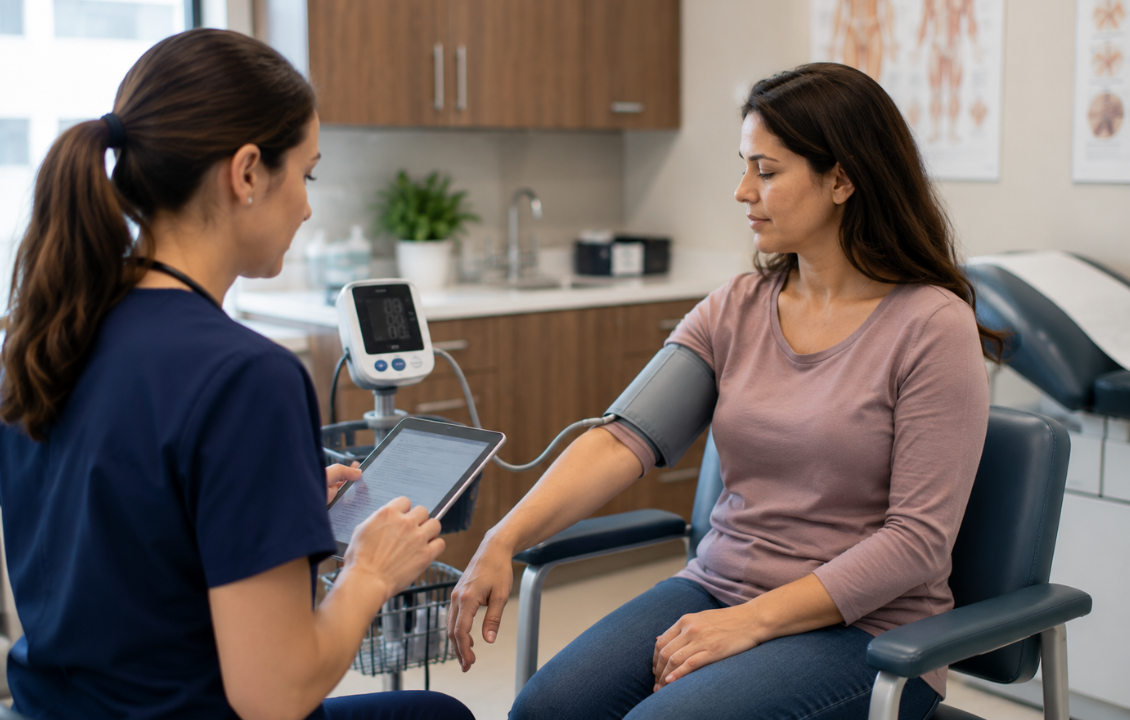
Stepping into healthcare for the first time can feel like a maze of similar-sounding job titles such as Certified Nursing Assistant (CNA), Patient Care Technician (PCT), and Medical Assistant (MA), but the roles, training, and certification exams are different.
Two of the most common starting points are the Certified Nursing Assistant (CNA) and the Patient Care Technician (PCT). Both are entry-level roles that involve hands-on patient care. Both can be a stepping stone into nursing or a longer medical career. But they are not interchangeable.
The short version: a PCT performs all CNA duties plus additional clinical procedures like drawing blood and running EKGs/ECGs. That extra scope changes the training path, exam requirements, work settings, and pay.
This guide breaks down the differences so you can pick the role that fits where you want to work and how much time you want to spend in school.
In This Article:
- Key differences between PCTs and CNAs
- What is a Certified Nursing Assistant?
- Pros and Cons of becoming a CNA
- What is a Patient Care Technician
- Pros and Cons of becoming a PCT
- PCT vs CNA Training Timeline
- PCT vs CNA: Certification Exam and State Registry
- PCT or CNA: Which should you choose?
PCT vs CNA: Key Differences
| Category | CNA | PCT |
| Primary Focus | Direct care: ADLs, mobility, comfort, vital signs | Direct care plus clinical procedures (phlebotomy, EKG/ECG) |
| Training Requirements | State-approved program (75-150+ hours) and state exam (written + skills) | Varies: CNA-Phlebotomy-EKG programs; national certification |
| Certification | State Registry | National Certifying Bodies |
| Skills Exam Required? | Yes | No |
| Work Settings | Nursing homes, assisted living, rehab centers, and home health | Hospitals (ER, ICU, Med-Surg), dialysis clinics, blood banks |
| Salary Range | $39,500 per year average | $44,000 per year average |
| Career Pathway | Strong pre-nursing foundation | Broader clinical exposure; strong prep for nursing, PA, or medical school |
Both roles require compassion, communication skills, and teamwork.
What is a Certified Nursing Assistant (CNA)?

A Certified Nursing Assistant focuses on the physical comfort and basic daily needs of residents. CNAs work under the supervision of a licensed practical nurse (LPN) or registered nurse (RN) and are essential workers in long-term care.
Where CNAs Work
- Long-term care settings:
- nursing homes
- assisted living facilities
- rehabilitation centers
- home health care
- Hospitals (Though PCTs are preferred)
CNA Key Responsibilities
Activities of daily living (ADLs)
Bathing, grooming, and dressing residents. Assisting with toileting and incontinence care. Helping residents eat and ensuring they stay hydrated.
Mobility and physical support
Safely lifting and transferring residents between beds and wheelchairs. Repositioning bedridden residents regularly to prevent bedsores. Assisting with walking and light exercise.
Basic monitoring
Measuring and recording vital signs (blood pressure, temperature, heart rate, oxygen levels). Observing residents for physical or mental changes and reporting them to the nursing staff.
CNAs cannot make clinical assessments, administer medications, or perform invasive procedures. Their role is to observe, care, and report.
Pros and Cons of Becoming a CNA
The CNA path is the fastest and most affordable way to start working in healthcare. The trade-off is a narrower scope of practice and lower pay than roles that require more training.
Pros:
- Short training timeline: Most CNA programs take 4 to 12 weeks, meaning you can start working and earning quickly.
- Strong job demand: Nursing homes, assisted living facilities, and home health agencies consistently need CNAs, which translates to steady job security in most areas.
- Foundation for further nursing education: CNA work is one of the best hands-on preparations for an LPN or RN program, and many employers offer tuition assistance for nursing school.
Cons:
- Limited scope of practice: CNAs cannot perform clinical procedures such as drawing blood, running EKGs/ECGs, or administering medications without additional training.
- Lower pay: Among credentialed nursing support roles, CNAs generally earn the least.
What is a Patient Care Technician (PCT)?
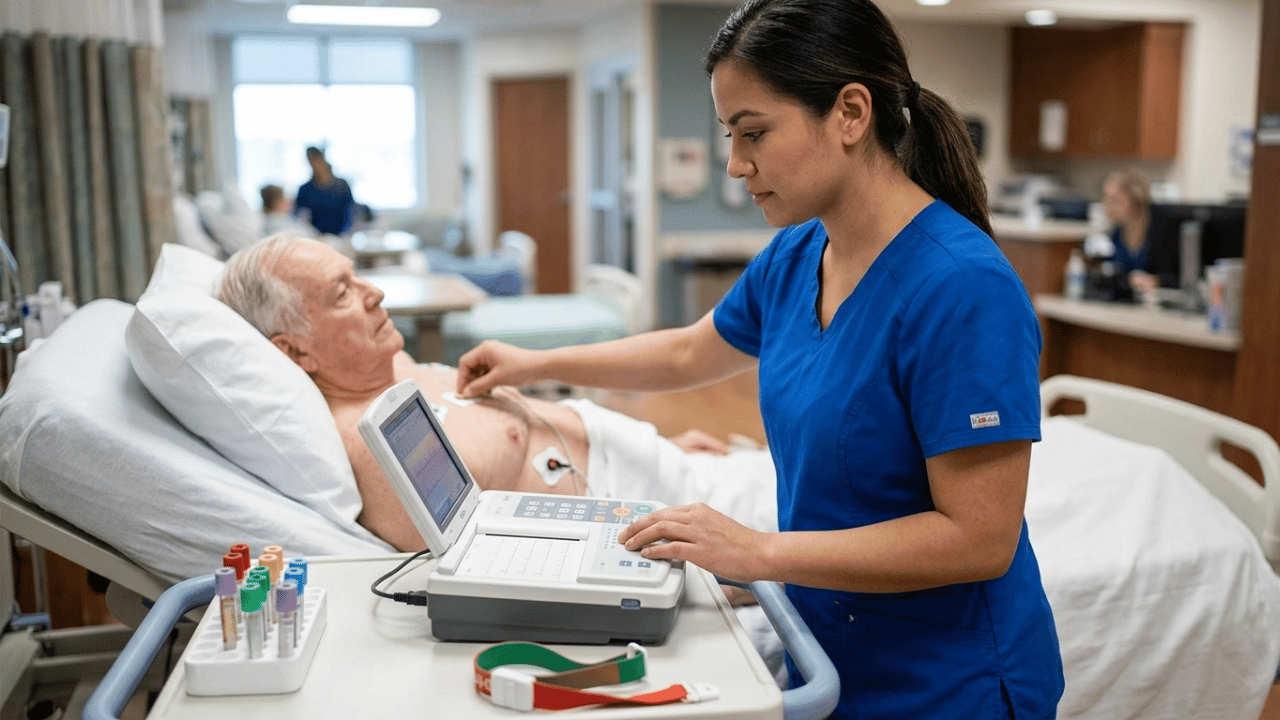
A Patient Care Technician performs all the basic caregiving duties of a CNA and adds a layer of clinical procedures. PCTs are trained to draw blood, perform EKGs/ECGs, and, in many states, perform other basic clinical tasks typically reserved for nursing staff in CNA-only facilities.
Depending upon the state and facility, becoming a PCT may require completing a CNA program first, then adding PCT-specific training (phlebotomy and ECG coursework).
Where PCTs Work
- Acute care settings:
- hospital emergency rooms
- intensive care units
- specialized wards
- Dialysis centers
- Blood banks
The environment is faster-paced than long-term care, and the patient acuity is generally higher.
PCT Key Responsibilities
- All CNA duties: Bathing, feeding, transferring, and supporting patients, plus vital sign measurement and documentation.
- Phlebotomy: Drawing blood for laboratory tests.
- EKGs/ECGs: Operating electrocardiogram machines to monitor heart activity.
- Advanced clinical tasks (scope varies by state): May include removing IVs, inserting or removing catheters, telemetry monitoring, and performing basic wound care.
The expanded scope is the defining feature of the PCT role. What a PCT can legally do on the job varies from state to state, so check your state’s specific regulations before enrolling in a program.
Pros and Cons of Becoming a PCT
The PCT path trades a longer training timeline for a broader skill set, higher pay potential, and exposure to clinical environments that benefit students planning to continue to nursing, PA, or medical school.
Pros:
- Higher earning potential: Because of their clinical skills, PCTs generally earn more than CNAs.
- Advanced clinical exposure: PCTs work directly with phlebotomy, cardiac monitoring, and acute patient care. This experience is valuable on nursing school applications and for students targeting medical school or a PA program.
- Hospital and acute-care settings: PCTs typically work in hospitals, emergency rooms, dialysis centers, and ICUs, which are faster-paced than long-term care environments.
Cons:
- Longer training required: PCT training usually involves completing a CNA program plus additional coursework in phlebotomy and EKG. The full path can take several months to a year.
- More clinically demanding work: Drawing blood, working with acute patients, and supporting fast-paced units can be more stressful than long-term care work, particularly during the early months on the job.
PCT vs CNA Training Timeline
| CNA | PCT | |
| Classroom hours | 40-100+ | 120-150+ |
| Clinical hours | 16-40 | 40-100 |
| Total time | 4-12 weeks | 12-24 weeks+ |
Some states require CNA certification first
PCT vs CNA: Certification Exam and State Registry
| CNA Certification Exam | PCT Certification Exam | |
| Regulating Body | State Nurse Aide Registry; exams are often via Pearson VUE or Prometric | National certifying bodies, most commonly the National Healthcareer Association (NHA) |
| Written Exam Format | Multiple-choice; scenario-based questions included | Multiple-choice; includes clinical knowledge beyond CNA scope |
| Skills/clinical exam | Yes, mandatory hands-on skills demonstration | There is no separate skills exam*; skills are tested through a written exam (phlebotomy, EKG, etc.) |
| Standardization | Varies by state | National standardization |
CNA
All CNAs are required to pass the nursing assistant certification and register with their state agency.
PCTs
- It depends on where PCTs work
- Long-term care facilities in all states require a CNA certification and state registry
- Dialysis centers require state registration, most often with the state board of nursing
- Hospitals and other acute-care facilities require certification, but workers do not have to be on the state registry
PCT vs CNA: The Written Exam Content
Both exams will cover:
- Activities of Daily Living (ADLs)
- Vital Signs
- Infection Control
- Communication
- Patients’ Rights
The PCT exam will have additional questions on:
- Phlebotomy
- EKG/ECG
- Point of care testing (e.g., glucose monitoring)
- In some states, urinary catheter care and telemetry monitoring
Which Exam is harder: PCT or CNA?
CNA Exam:
- The Skills Exam can be stressful
- Focus is on safety and daily care
- High pass rate
PCT Exam:
- No skills exam, but the written test has more content
- Includes Phlebotomy, EKG/ECG, and other procedures
- Requires more memorization and technical understanding
Overall, the PCT exam is considered harder due to the additional knowledge needed.
Do you need to be a CNA before becoming a PCT?
In many states, yes.
PCT programs often require basic nursing skills, CNA certification, and a state registry before starting.
Hospitals may hire PCTs without certification, but many programs require it.
Always check your state’s nurse aide registry or board of nursing.
PCT vs CNA Salary Comparison
| Role | Average U.S. Salary | Factors that Increase Pay |
| CNA | $39,500 a year | Experience, shift differentials, hospital roles |
| PCT | $44,000 a year | Hospital setting, specialty units, clinical skills |
PCTs generally earn more because they perform additional clinical procedures.
PCT or CNA: Which Should You Choose?
Choose CNA if you:
- Want to enter the workforce in a matter of weeks
- Need to start earning while keeping schooling costs low
- Are drawn to long-term care environments where you build relationships with residents over time
- Want the most direct path into an LPN or RN program
Choose PCT if you:
- Are fascinated by the clinical side of healthcare (blood draws, cardiac monitoring, procedures)
- Want to work in a fast-paced hospital or acute-care setting
- Are willing to spend a few extra months in school for a broader skill set and higher pay
- Are considering nursing school, PA school, or medical school down the road
Both paths lead to solid careers. The question is not which one is better; it is which one fits where you want to work and how much time you have to invest before you start earning.
Ready to Decide? Take a Free Practice Test Today
The best way to know if you are ready for the work is to test yourself on the material. All Healthcare Careers offers free CNA practice exams so you can test your readiness before enrolling. Use your scores as a gut check before committing to a program.