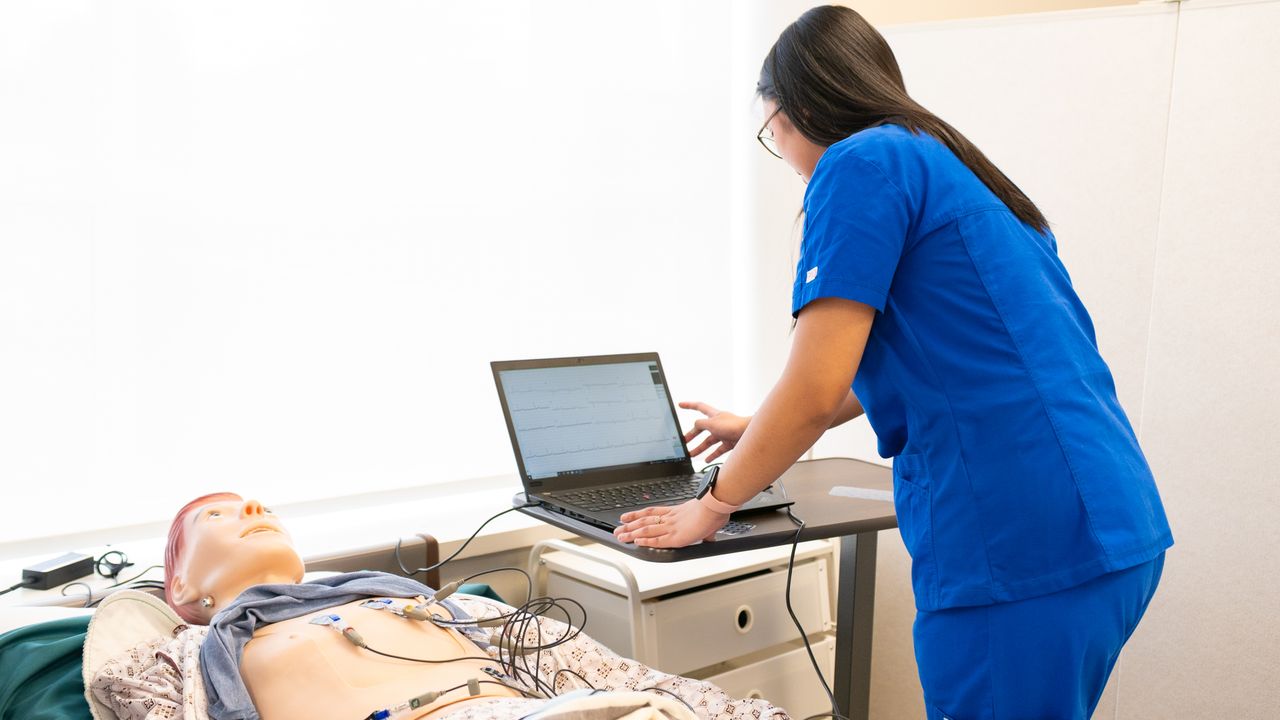
A large part of working as a Certified Nursing Assistant (CNA) is helping patients with their daily needs. As important as direct hands-on care is, it is equally important to communicate what you did and what you observed. This is done with accurate documentation.
As a nurse, I depended on the CNAs’ charting to provide patient care. I used vital signs to give medications that were based on blood pressure and pulse rate, updating the patient’s condition and calling the provider. If the charting had been incorrect, the patient may have suffered the consequences.
CNA charting is the official process of documenting a patient’s vital signs, physical condition, and Activities of Daily Living (ADLs). It serves as a legal medical record and the primary communication tool between CNAs, nurses, and doctors.
In This Article, We Will Discuss
- Why accurate charting matters
- What CNAs are expected to chart
- Basic Rules of Charting
- Objective vs. subjective data
- Common charting mistakes
- Charting examples
- Point-of-care and electronic vs paper charting
- Tips to chart faster and gain confidence
Why Is Accurate CNA Charting So Important?

The #1 Rule of Documentation
“If it wasn’t charted, it didn’t happen.” is a phrase that has been in nursing for as long as I can remember.
Charting is a written statement that something was done or observed. Providers and nurses rely on the information to adjust plans of care. Not charting or charting incorrectly can harm the patient and delay progress.
Accurate, timely documentation supports:
- Continuity of Care: Nurses rely on your notes to recognize changes, update the care plan, and give accurate reports. Doctors use charting to understand a patient’s current status. The next CNA coming on shift depends on your documentation to pick up where you left off.
- Legal Protection: The chart is a legal document. In the event of a lawsuit, the chart is the primary source used to tell the story of what happened. Clear, factual charting protects both the CNA and the patient.
- Billing and Reimbursement: Government insurance agencies, like Medicaid, use documentation to determine what will be reimbursed to a facility. Missing or incomplete charting can lead to denied claims, which affects the entire facility.
What Do CNAs Chart?
CNAs chart observations and care provided. Observation is using the sense of sight, hearing, touch, and smell to collect information.
⚠️ Important Rule of Thumb: If there is a sudden change in a patient, report it to the nurse immediately. If it is routine care, document. If you are in doubt, report it!
As a CNA, you will document everything you do for a patient, which includes:
Activities of Daily Living (ADLs)
ADLs are an important part of a CNA’s daily responsibilities. During bathing, dressing, grooming, toileting, eating, and mobility assistance, you are in a unique position to observe details other members of the care team may not see.
Common ADL observations include:
- Bathing: level of assistance required, skin condition observed
- Dressing: level of independence, any difficulty with the range of motion
- Grooming: hair qualities, oral care, nail condition
- Toileting: frequency, incontinence, any difficulty
- Eating: amount eaten, assistance needed
- Mobility and transfers: distance walked, assistive devices used, level of assistance
Example: Charting how well a patient manages dressing can help occupational therapy (OT) adjust the plan of care to encourage more independence.
Intake and Output
Intake and output (I&O) monitoring depends on the level of care and facility policy.
In many long-term care facilities, CNAs may chart:
- Percentage of meal eaten
- Approximate fluid intake
- Number of times the resident voided
- Bowel movements (including consistency, if required)
In higher-acuity settings, like hospitals, there may be strict I&O orders, where:
- All fluids are measured in milliliters (mL)
- Urine is measured and recorded
- Emesis (vomit), drainage, and other outputs are tracked
The patient’s provider will have an order that details how closely I&O must be monitored.
Vital Signs and Measurements

Vital signs and measurements are charted according to the patient’s level of care, provider orders, and facility policy. Many residents in long-term care are stable and will not need them taken daily. Hospital patients may need more frequent monitoring.
Vital signs and measurements include:
- Blood pressure
- Respirations
- Pulse
- Oxygen saturation
- Temperature
- Height and weight
Changes in Condition
Any changes in a patient’s condition must be reported to the nurse first. Once the nurse is aware and the patient is safe, you can complete the charting.
Changes that must be reported immediately include:
| Change in condition | Observations |
|---|---|
| Alertness or level of consciousness | Confusion, extreme sleepiness, or agitation |
| Behavior or mood | Aggression, depression, wandering, or sudden loss of memory: time, place, and situation. |
| Breathing | Shortness of breath, a new cough, or wheezing |
| Mobility | New weakness, refusal to stand, or unsteady gait |
| Pain | New pain, worsening pain, or pain that prevents activity |
| Skin Condition | Bruises, swelling, cuts, open areas, or rashes |
| Vital Signs | Fever, low oxygen, abnormal pulse, or blood pressure |
Refusal of Care
If a patient refuses care, it must be:
- Reported to the nurse
- Documented clearly
Example: “Resident refused morning bath, stated, ‘I already washed up.’ Nurse notified.”
What CNAs Should Not Chart
States may differ slightly, but the general rule is: if you cannot perform the task within your scope of practice, you cannot chart it.
CNAs cannot perform or chart:
- An assessment or diagnosis of a patient’s condition
- A judgment as to why something happened
⚠️ Important: Scope of Practice are the rules set by each state that determine the tasks and duties Certified Nursing Assistants are legally allowed to perform. Knowing your scope of practice is a very important part of the nursing assistant certification exam.
Additionally, CNAs should not chart the following:
Opinions or Judgmental Language
Only report facts; your opinion may or may not be a fact.
- Example: I think Mr. Jones, in room 120, is depressed; he wasn’t talking and didn’t eat his breakfast.
- Better: Mr. Jones, in room 120, did not eat his breakfast or engage in conversation this morning.
Anything You Did Not Personally Observe
Never chart what someone else told you. If you did not see it yourself, you can’t be certain it is correct.
The person who witnessed this completes the charting, even if it is your assigned patient.
Entries Outside the Scope of Practice or Beyond Facility Policy
Follow your state’s CNA scope of practice and your facility’s documentation policies.
The Basic Rules of Good CNA Charting
Chart Facts, Not Opinions
Avoid “I think” or “seems.” Use factual descriptions of what occurred.
- Example: “I helped feed Mrs. Smith, I opened her milk, and she did the rest.”
- Better: Mrs. Smith ate breakfast independently with minimal assistance to open the milk container.
Be Accurate and Specific
Your notes should be clear but concise. Use exact measurements when possible.
- Example: Mr. Perez wanted to go for a walk, so I helped him. He walked in the hallway for a little while.
- Better: Mr. Perez walked 50 feet in the hallway with his walker and a standby assist.
Chart Promptly
Chart as soon as possible:
- Increases accuracy
- Reduces forgotten details
- Helps the healthcare team respond quickly
Point-of-care tools make it easier to chart at or near the bedside.
Use Approved Abbreviations Only
There are standardized abbreviations required by accreditation and insurance agencies. In addition, standard abbreviations help prevent errors. Your facility will provide a list.
If you’re unsure, write it out.
Example: “ADLs” is widely accepted for “Activities of Daily Living.”
Keep Entries Clear and Legible
If your facility has paper charting, write clearly. Illegible handwriting causes errors. This is one reason electronic health records have been required in many facilities.
Never Chart for Someone Else
Never chart something you didn’t do. It is illegal and can cost you your job and certification.
I personally knew a coworker who was fired for charting for a friend to “help” her catch up. Even with good intentions, it’s still falsifying a legal record.
Correct Mistakes the Right Way
- Paper charts: Draw a single line through the error, write “error,” initial, and date, then write the correct information.
- Electronic records: Use the correction or addendum feature. Never try to delete or hide an entry.
Objective vs. Subjective Charting
Knowing the difference between objective and subjective information is important in your charting.
- Objective data is what you can observe or measure.
- Examples: grimacing and holding the stomach; the amount of food eaten
- Subjective data is what the patient says.
- Examples: pain, nausea, or anxiety.
You will chart both objective and subjective information.
| Objective | Subjective |
|---|---|
| The patient ate 50% of lunch. | The patient reported his pain as a 9/10. |
| The patient walked to the bathroom and back without assistance. | The patient said he took a shower before coming to the hospital. |
⚠️ Exam tip: You will be asked to choose “Which of the following is an example of subjective data?” (or objective data) Remember: Objective is observable; Subjective is what the patient said or felt.
CNA Charting Examples
Documentation can seem difficult at first. As with any skill, the more you repeat it, the better you will be. Here are sample entries you can model, always adjusting to your facility’s policies and charting system.
ADL Charting Example
Residents required total assistance with morning baths. Skin is warm and dry. No redness, bruising, or open areas noted. Residents tolerated care without distress.
Toileting Charting Example
Residents assisted to commode at 0900. Void approximately 200 mL of clear yellow urine. Denied discomfort. Perineal care provided. The resident returned to bed with two-person assistance.
Intake and Output Charting Example
0700-1500 shift: Oral intake 480 mL water, 240 mL juice, 120 mL coffee. Urinary output 600 mL, light yellow, no sediment noted. One bowel movement, formed and brown.
Meal Intake Charting Example
Residents ate 75% of breakfast: consumed all eggs and toast, declined orange juice. No difficulty swallowing observed. The resident fed himself independently.
Behavior Observation Example
The resident was pacing in the hallway at 1400, repeatedly asking to go home. Redirected to the common area with staff assistance. Residents calm after 10 minutes of engagement. Nurse notified.
Skin Observation Example
Redness noted on the left heel, approximately 3 cm, non-blanching. Area intact, no open skin. The nurse was notified at 1030. Resident repositioned per care plan.
Refusal of Care Example
The resident refused a morning bath at 0800, stating ‘I don’t want to be bothered today.’ No signs of distress observed. Nurse notified of refusal. Residents offered an alternative time for care later in the shift.
Pain Observation Example
The resident reported pain in right knee at 7/10 at 1330. Resident grimacing and guarding right knee. Refused to stand for transfer. Nurse notified at 1335.
Point-of-Care CNA Charting

POC technology is used to reduce the constant back-and-forth between the bedside and the chart, helping CNAs document tasks where care is happening.
What Does Point-of-Care Charting Mean?
POC charting is documenting at the bedside as you complete it. The information is electronically transferred to the patient’s chart. You can document ADLs, intake, output, and other tasks in real time.
How POC Charting Can Save Time
POCs are used to keep data current, but there are also time-saving advantages. Some time-saving advantages are as follows:
- No need to write notes and chart later, this helps eliminate duplicate work.
- POCs help reduce the mental load of remembering multiple patients’ details across an entire shift.
- POC charting also improves communication. When the nurse checks the chart, the information is already there.
Common POC Charting Tools
As technology improves, there will undoubtedly be improvements in POC devices. Some current examples are:
- Bedside tablets or computers on wheels (COWs): Mobile devices that travel with the care team and allow entry directly into the electronic health record
- Handheld devices or smartphones: Some facilities use secure mobile apps for quick ADL and vital sign entry
- Wall-mounted terminals: Fixed terminals outside patient rooms used for quick check-in documentation
In addition, some devices worn by patients, such as glucose and heart rate monitors, transfer information directly to the chart.
Challenges with Bedside Documentation
- Devices may not always be available or charged
- Privacy concerns require logging out after every use
- Learning a new system takes time and practice
- Technical issues can interrupt the workflow
- Small screens can be hard to read
- It can be tempting to focus on the screen instead of the patient
Tips for Using Electronic Charting Systems Accurately
- Log out or lock the screen when stepping away
- Follow facility policies for late entries
- Use only approved abbreviations
- Double-check entries before submitting
- If something doesn’t look right in the system, ask for help before proceeding
Electronic Charting vs Paper Charting
Electronic Medical Records (EMRs) are common in modern care settings. In 2014, the federal government announced it would no longer give full reimbursement for Medicare/Medicaid services to hospitals or physicians not using electronic health records. Long-term care facilities were not included in that mandate, so you may still see paper charting or a combination of both.
Regardless of which system your facility uses, the standards remain the same: accuracy, timeliness, and clarity.
| Feature | Electronic Charting | Paper Charting |
|---|---|---|
| Legibility | Always legible | Depends on handwriting |
| Access | Instantly available to multiple team members | Must locate the physical chart |
| Speed of review | Fast, real-time updates are available to review history and trends | Slower, it requires a manual review |
| Prompts and safeguards | Built-in alerts and required fields | Relies on staff memory and habit |
| Corrections | Done via addendum or correction log | Single line through error, initial, date |
| Security | Requires login; access is tracked | Must be stored securely; easier to misplace |
| Technology dependence | Can have outages, login issues, and terminal availability | No technology required |
| Cost | Cost of equipment and training employees is very high | Cost of paper and storage is moderate, training cost is minimal |
Important reminders
- Never leave a computer screen open where someone else can read it. Log out when you’re done. Leaving it exposed can violate HIPAA.
- Never adjust the time to make charting “appear” current. Systems track log-in and log-out times. If you are charting late, use the appropriate “late entry” or documentation tab instead of changing the time.
⚠️ One of the newest additions to electronic records is the use of AI tools. The AI tool can quickly create a patient note that meets all facility requirements. Hospital administrators predict it will save 2 hours of work time a day. If your facility uses AI-assisted documentation, you are still responsible for reviewing and confirming the accuracy of every entry before it is finalized.
Common CNA Charting Mistakes
Charting mistakes happen, especially when you are new. Being aware of some of the common mistakes can help you prevent many of them.
- Documenting late or waiting until the end of the shift. Increases the risk of forgetting details and creates legal vulnerability. Chart during or right after care whenever possible.
- Charting from Memory. Relying on memory instead of real-time notes can lead to inaccurate entries.
- Vague or non-specific language. “Ate well” or “seemed okay” are not measurable. Use percentages, distances, and descriptive language.
- Leaving out refusals. If a patient refuses care, notify the nurse and document. This protects you and the patient.
- Using unapproved abbreviations. Abbreviations not recognized by the facility or those on the Joint Commission’s “Do Not Use” lists can cause dangerous miscommunication.
- Copying or repeating without verifying. Never assume today is the same as yesterday. Always verify before repeating entries.
- Failing to chart after notifying the nurse of changes in condition. Patient safety is first. You must notify the nurse, but it is just as important to chart it.
How to Chart Faster Without Making Mistakes
- Chart as close to the time of care as possible. The closer you are to the event, the less you’ll forget.
- Learn the most-used fields in your system. Knowing where things are saves time and reduces frustration.
- Use facility-approved terms consistently. Consistency makes your notes easier to understand and audit.
- Keep mental or written prompts if allowed by policy. A small pocket notebook or brain sheet (if permitted) can help you remember key details to chart.
- Prioritize accuracy over speed. A slightly slower, accurate note is better than a fast, incorrect one.
- Use point-of-care workflows when available. Documenting at the bedside reduces backtracking and memory gaps.
Tips for New CNAs
Feeling anxious about charting is completely normal, especially early in your career. Documentation is a skill, and like any skill, it improves with repetition and guidance.
Here are some practical tips that can help. During orientation, ask for (if not provided):
Approved Sample Entries
Your facility’s most common charting categories.
Find a Seasoned CNA and Ask Them To Review Your Charting
An experienced CNA can help you chart the correct way and give you time-saving tips.
When In Doubt, Stick To The Facts
If you are unsure how to word something, describe exactly what you saw, heard, or measured.
Report Concerns To The Nurse, Not Just To The Chart
It is always better to report a concern to the nurse and find it was nothing than to stay silent.
Practice Writing Concise, Measurable Observations
Even off the clock, you can strengthen this skill by describing situations in factual terms. It becomes second nature quickly.
Get Ready for CNA Training and Testing
Charting is not just a job skill; it is a core competency tested on the CNA state certification exam. Understanding how to accurately document ADLs, vital signs, changes in condition, and patient observations is essential to passing your exam and being prepared for your first day on the floor.
If you are currently preparing for your state exam, make sure your study plan includes:
- documentation standards
- objective vs. subjective data
- scope of practice
- rules for correcting charting errors
These concepts appear consistently in both the written and skills portions of the exam.
Ready to put your knowledge to the test? [Explore our CNA practice exams and study tools to build the confidence you need to pass and to chart like a pro from day one.]