

The demand for caregivers in 2026 is steady and growing, and both of these roles are a real way into the field. But they are not the same job, and they do not feel the same day to day. One question can help you decide quickly: do you want to be a clinical professional working on a team inside a hospital or nursing facility, or a steady presence in someone’s own home?
That is the main decision between choosing a Home Health Aide (HHA) or a Certified Nursing Assistant (CNA) career. Both help people with Activities of Daily Living, usually shortened to ADLs. ADLs are the everyday tasks of living that a person may need help with: bathing, dressing, eating, toileting, grooming, and moving around safely. Where the two roles differ is in where that help happens, how much clinical responsibility comes with it, and how much training it takes to start.
A note on the term “HHA.” This article compares a CNA against a Home Health Aide, a caregiver who supports clients in their own homes and, in a Medicare-certified agency, works under a nurse’s plan of care. You will sometimes see “HHA” used interchangeably with Personal Care Aide (PCA), but the two are not identical: a PCA’s work is generally non-medical, while an HHA may perform some health-related tasks under supervision. If you’re specifically comparing a PCA role with a CNA, see our PCA vs. CNA guide.
What Is a Home Health Aide (HHA)?

An HHA is a caregiver who helps people stay in their own homes. The clients are often older adults, people recovering from an illness or surgery, or people living with a chronic condition or disability who want to maintain as much independence as possible.
The HHA’s job is to support the client throughout the day, not just with one task. A typical day might include helping a client bathe and dress, preparing meals and making sure they eat, doing light housekeeping, picking up groceries or prescriptions, and accompanying the client to appointments. Companionship is not a side benefit of the role; for many clients, it is the heart of it. The HHA is often the one person who sees that client every day.
In a Medicare-certified home health agency, an HHA works under a care plan set by a nurse and reports changes in the client’s condition back to that nurse. The work is more independent than a hospital job, because you are usually the only caregiver in the home, and it needs a particular kind of person: patient, observant, and comfortable building trust one-on-one.
What Is a Certified Nursing Assistant (CNA)?
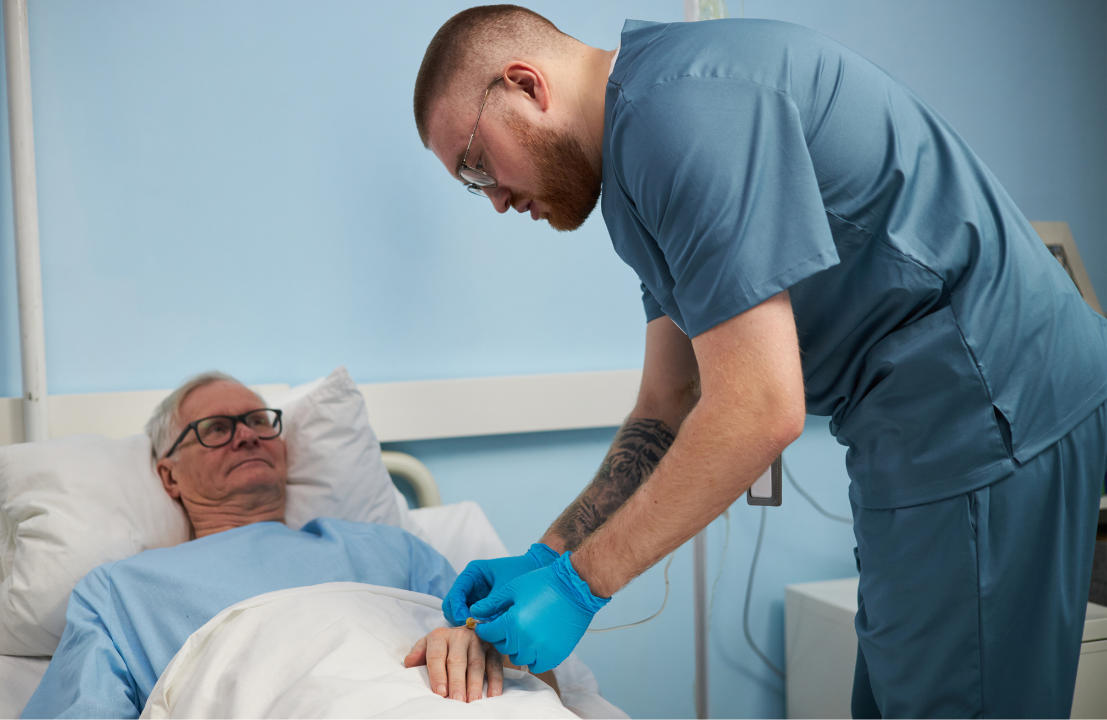
A CNA works in a more clinical, structured environment, usually a nursing home, a skilled nursing facility, or a hospital floor. The setting is busy and team-oriented, and the CNA is part of a larger care team led by nurses. Readers interested in hospital-based patient care may also want to compare the CNA role with a Patient Care Technician (PCT), another common support role in clinical settings.
A CNA handles many of the same ADLs an HHA does, but the role carries more medical responsibility and a tighter scope of practice. CNAs take and record vital signs, watch closely for changes in a resident’s condition, and report what they observe to the nurse. The phrase that gets used in training is that the CNA is the eyes and ears of the registered nurse, because the CNA spends the most time with residents and is often the first to notice a problem. A CNA observes and reports; they do not administer medications, make clinical assessments, or perform sterile procedures, which fall to licensed nurses.
The pace is different, too. Instead of one client in one home, a CNA may be responsible for a group of residents across a shift, moving between rooms, answering call lights, and keeping the floor running alongside the nursing staff.
Key Differences at a Glance
| Feature | HHA | CNA |
|---|---|---|
| Work setting | Client’s home | Nursing facility, hospital |
| Patient ratio | One-on-one | Many residents |
| Federally and state-regulated? | Yes, if working for a Medicare-certified home health agency* | Yes, and also the state registry |
| Training | 75 hrs minimum* | 75 hrs minimum |
| Exam | Yes* | Yes |
| General duties | ADLs, mobility, minimal clinical care | ADLs, mobility, vital signs, observation, and reporting |
| Salary (BLS May 2025) | $17.21/hr, about $35,800 a year* | $20.32/hr, about $42,650 a year |
*The information provided applies to HHAs who work for a Medicare-certified agency.
Note: These are general patterns, not hard rules. Training requirements and scope for both roles vary by state and by employer, and some HHAs in clinical home-health programs take on more medical tasks than the table suggests. Always check your own state’s requirements before you choose a program.
Training and Certification Requirements
The difference and availability in training are usually what make someone decide to choose between the HHA and CNA path.
The HHA Path
Entry into home care is faster. Home health aides who work for a Medicare-certified agency must complete at least 75 hours of training, including at least 16 hours of supervised, hands-on practical training, and pass a competency evaluation. Some private-duty or non-agency caregiving positions require less formal training, or none, depending on the state. Clinical tasks are very limited if you are not trained by and working for a Medicare-certified agency.
The CNA Path
Becoming a CNA takes more. You complete a state-approved training program, which combines classroom instruction with supervised clinical practice. Federal law sets a floor of at least 75 hours, and many states require more. After training, you must pass your state’s certification exam. This is the step that sets the CNA apart: the exam includes a written portion and a practical, hands-on skills test, where you perform real care tasks, such as a transfer or handwashing, in front of an evaluator. Passing places you on your state’s nurse aide registry.
That extra training and the hands-on exam are exactly why the CNA carries more clinical responsibility, and why it opens more doors later.
Salary and Career Outlook
Pay for both roles is modest at entry and shaped heavily by your state, setting, and shift.
According to the Bureau of Labor Statistics, the median annual wage for nursing assistants was $42,650 in May 2025, or about $20.32 an hour. For home health and personal care aides, the median was $35,800 a year, or about $17.21 an hour. According to Indeed, as of May 2026, the average hourly pay for a CNA was $20.25 an hour, and for an HHA it was $17.55 an hour.
The bigger difference is where each role leads. The CNA is widely treated as a bridge into nursing. Many people work as a CNA while completing prerequisites for an RN or LPN program, and the bedside experience counts for a great deal once they get there. An HHA career tends to grow in a different direction: toward specialized private-duty care, hospice and palliative support, or moving up within an agency into scheduling, training, or management. Neither is a dead end; they simply point at different futures.
How to Choose Between the Two
Both roles are good entry points into healthcare. The right one depends on the setting you want, the responsibility you want, and how soon you want to start.
Choose the HHA path if you:
- Want close, one-on-one relationships rather than a crowded floor
- Prefer working in homes and the community over a clinical facility
- Value autonomy and a flexible schedule
- Have strong emotional intelligence for navigating family dynamics
- Want to start working as soon as possible with minimal upfront training
Choose the CNA path if you:
- Want a clinical foundation and a recognized certification
- Are drawn to a structured, fast-moving, team-based environment
- Have the physical stamina for busy hospital or nursing-home shifts
- Want the broadest job mobility across settings
- See yourself bridging into nursing school down the road
If you are still torn, weigh it this way: the HHA path gets you working sooner and rewards patience and connection, while the CNA path asks for more training upfront and gives you more clinical responsibility and more room to grow.
Ready to Start Your Journey in Care?
Whichever path you choose, you are entering a field with steady, long-term demand. According to the National Center for Health Workforce Analysis within the Bureau of Health Workforce, demand for home health aides is projected to grow about 36 percent through 2038, while demand for personal care aides is projected to grow about 38 percent. The same report projects demand for nursing assistants to grow about 44 percent through 2038, reflecting the long-term need for caregivers across settings. The CNA’s job growth looks smaller at 2 percent, but it is actually very strong for employment opportunities. Many CNA job openings come from CNAs who move into a nursing position or retire. Caregiving work is needed everywhere, and that is not changing.
The best first step is a practical one. Look up your state’s Department of Health, or a local community college, to find an approved training program near you and the exact requirements where you live. If the CNA path is the one that fits, preparing for the certification exam early makes a real difference, and practicing with realistic questions before test day is one of the most reliable ways to walk in ready. Our CNA practice materials are built to help you do exactly that.